
How to Identify Safe Ingredients in Eyeshadow and Makeup Products
Choosing makeup isn’t just about color and coverage—it’s also about protecting your skin and eyes. Understanding ingredient labels can help you select safer beauty products and reduce the risk of irritation or allergic reactions.
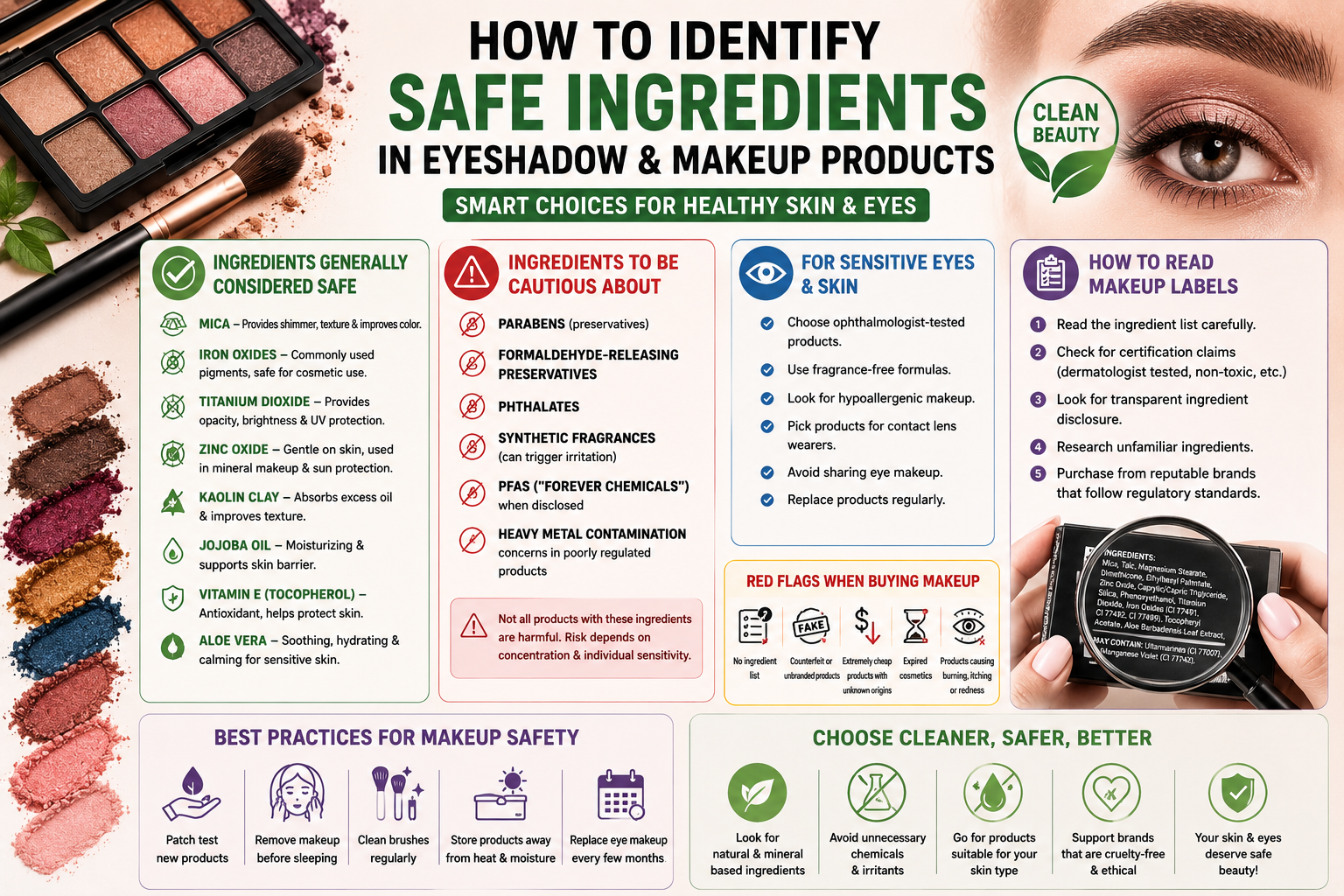
Ingredients Generally Considered Safe
Look for products containing:
✅ Mica – Provides shimmer and color.
✅ Iron Oxides – Commonly used pigments considered safe for cosmetic use.
✅ Titanium Dioxide – Used for color and UV protection.
✅ Zinc Oxide – Gentle on sensitive skin and commonly used in mineral makeup.
✅ Kaolin Clay – Helps absorb excess oil.
✅ Jojoba Oil – Moisturizing and skin-friendly.
✅ Vitamin E (Tocopherol) – Antioxidant that supports skin health.
✅ Aloe Vera – Soothing and hydrating.
Ingredients to Be Cautious About
Some people prefer limiting exposure to:
⚠️ Parabens (preservatives)
⚠️ Formaldehyde-releasing preservatives
⚠️ Phthalates
⚠️ Synthetic fragrances (can trigger irritation in sensitive individuals)
⚠️ PFAS (“forever chemicals”) when disclosed
⚠️ Heavy metal contamination concerns in poorly regulated products
For Sensitive Eyes
Choose:
- Ophthalmologist-tested products
- Fragrance-free formulas
- Hypoallergenic makeup
- Products designed for contact lens wearers
Avoid sharing eye makeup and replace products regularly to reduce contamination risks.
How to Read Makeup Labels
- Read the ingredient list carefully.
- Check for certification claims from reputable organizations.
- Look for transparent ingredient disclosure.
- Research unfamiliar ingredients.
- Purchase from established brands that follow regulatory standards.
Red Flags When Buying Makeup
❌ No ingredient list
❌ Counterfeit or unbranded products
❌ Extremely cheap products with unknown origins
❌ Expired cosmetics
❌ Products causing burning, itching, or redness
Best Practices for Makeup Safety
- Patch test new products.
- Remove makeup before sleeping.
- Clean brushes regularly.
- Store products away from heat and moisture.
- Replace eye makeup every few months as recommended by the manufacturer.
Conclusion
The safest eyeshadow and makeup products typically contain well-studied pigments and skin-friendly ingredients while avoiding unnecessary irritants. By reading labels carefully and choosing reputable brands, you can enjoy makeup while protecting your skin and eye health.
0 Comments